

Green Pool? What Causes It and How to Get It Clear Again
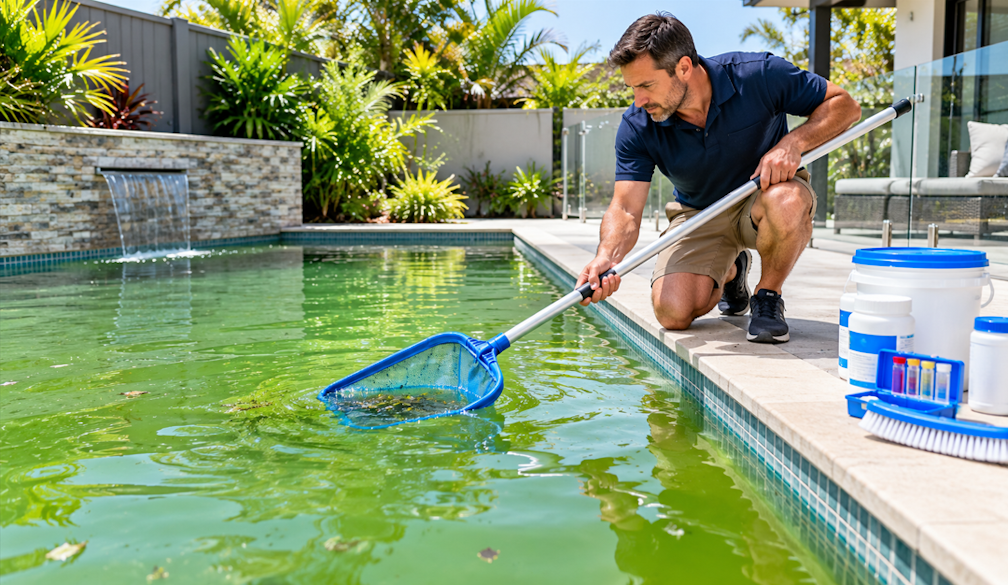
You walk outside on a Monday morning, coffee in hand, planning a swim after work. Instead of clear blue water, you’re looking at something closer to pea soup.
A green pool is one of the most common and frustrating problems Perth pool owners face, and it usually happens at the worst time. The good news is that it’s fixable. Once you understand why it happens, you can also stop it from happening again.
This guide covers the causes, the fix and prevention, with Perth’s climate in mind.
Why Do Pools Turn Green?
In almost every case the cause is algae, usually green algae, which is the most common type in residential pools.
Algae spores are in virtually every pool. They arrive on the wind, in rain, on swimwear and even on pool toys. Normally your chlorine kills them before they can settle in. Problems start when something upsets that balance.
Low Chlorine
Low or depleted chlorine is the number one cause. Perth’s strong UV and high summer temperatures break chlorine down quickly, so a pool that looked fine on Friday can start turning by Sunday if levels drop.
pH Out of Range
Incorrect pH is the second most common cause. When pH climbs above about 7.8, chlorine becomes much less effective. You can have a reasonable chlorine reading and still get algae if the pH is too high.
Poor Circulation and Filtration
If the pump isn’t running long enough, or the filter is dirty, water sits still and unfiltered for longer. That gives algae time to settle on walls and in corners before the sanitiser can reach it.
Equipment Faults
A salt chlorinator with a scaled-up cell can quietly stop producing enough chlorine. A pump with a blocked impeller or a failing motor can’t move enough water. Both lead to green water even when the owner is doing everything else right. If your chemistry keeps slipping despite regular testing, faulty equipment is a likely suspect, and arranging pool equipment repairs quickly will save you from repeated treatments.
Other Contributing Factors
- Heavy rain diluting chemical levels
- A sudden heatwave after mild weather
- Phosphates from leaves, garden fertiliser, soil and runoff, which feed algae
- Low stabiliser (cyanuric acid), leaving chlorine exposed to UV
- Heavy use, such as a weekend of parties or visitors
Why Perth Pools Are Especially Vulnerable
Perth summers regularly pass 40°C, and the UV index sits in the extreme range for long stretches. Sunlight breaks down unstabilised chlorine within hours on a clear day, and warm water lets algae grow faster. When chlorine dips in these conditions, a pool can go from clear to green very quickly, so the response needs to be quick too.
How Green Is Your Pool?
The fix depends on how far the algae has spread, so take a moment to assess before you start.
Light green or slightly hazy. You can see the floor, the water is tinged green and the walls may feel slippery. Caught at this stage, it usually clears within a day or two.
Mid green. The water is clearly green and you can only just make out the floor. Expect a few days of work.
Dark green or swampy. You can’t see the floor at all. This needs a heavier treatment and patience, and it may take up to a week.
One exception is worth knowing. If the water turns a clear green or teal straight after you add chlorine, and the walls aren’t slimy, the cause may be dissolved metals such as copper rather than algae. More chlorine won’t fix that, so get the water tested properly before you keep treating.
How to Fix a Green Pool: Step by Step
1. Clean Out the Debris
Scoop out leaves and anything floating, then empty the skimmer and pump baskets. Organic matter uses up chlorine you need for the algae.
2. Test the Water
Test pH, free chlorine, total alkalinity and stabiliser. A home kit works, but a store water test gives you a fuller picture, including phosphates and metals.
3. Balance the pH First
Bring pH into the 7.2 to 7.6 range before you shock. Chlorine works far better at the right pH, so this step makes the rest of the treatment more effective and less wasteful.
4. Brush Every Surface
Brush the walls, floor, steps and behind ladders. Algae clings to surfaces and shelters in corners. Brushing breaks it loose and exposes it to the chlorine.
5. Shock the Pool
Add a large dose of chlorine to raise levels well above normal. This is called shocking or superchlorinating. Follow the product label for dosage based on your pool’s volume and how green it is. A badly green pool may need more than one dose. Add chemicals in the evening so the sun doesn’t break them down straight away.
A few safety basics apply here:
- Always add chemicals to water, never water to chemicals.
- Never mix different pool chemicals together.
- Wear gloves and eye protection.
- Store chemicals out of reach of children.
6. Run the Filter Continuously
Keep the pump running around the clock until the water clears. As the algae dies, the water usually turns cloudy grey or blue. That’s a good sign, because it means the filter now has dead algae to remove.
7. Clean the Filter Often
The filter will clog quickly with dead algae. Check the pressure gauge regularly and backwash a media filter or hose down a cartridge filter whenever pressure rises. You may need to do this daily during treatment.
8. Vacuum the Floor
Once the dead algae settles, vacuum it up. On a media filter, vacuum to waste if your system allows, so the debris leaves the pool instead of loading the filter. If the water stays cloudy, a flocculant can help clump fine particles so they sink and can be vacuumed.
9. Retest and Rebalance
When the water is clear, retest everything. Bring chlorine back into its normal range (1 to 3 ppm) and check pH, alkalinity and stabiliser before anyone swims.
How Long Does It Take?
A lightly green pool often clears in a day or two. A dark green pool can take several days to a week of steady work. If you’ve followed these steps for a week and the water still won’t hold its chlorine, something else is going on.
When to Call a Professional
Some green pools resist home treatment. Bring in a professional if:
- The pool is dark green or swampy and you can’t see the floor
- The water clears, then turns green again within days
- Chlorine readings drop to zero soon after shocking
- You suspect a chlorinator, pump or filter fault
- The pool has been neglected for weeks, such as a new home or a holiday house
A professional technician can test for problems a basic kit won’t show, check your equipment and carry out a full recovery. Local pool services Perth homeowners rely on can usually turn a badly green pool around much faster than repeated trial and error, and they’ll find the underlying cause so it doesn’t come back.
How to Stop Your Pool Turning Green Again
Fixing a green pool takes days. Preventing one takes a few minutes a week.
Test Weekly, More in Summer
Test at least once a week, and two to three times a week during heatwaves. Catching a chlorine drop early is far easier than recovering from an algae bloom.
Keep pH in Range
Hold pH between 7.2 and 7.6 so your chlorine works properly. Perth water often pushes pH upward, so expect to adjust it regularly.
Maintain Stabiliser
Keep cyanuric acid at around 30 to 50 ppm. Without it, Perth’s sun breaks chlorine down far faster than you can replace it.
Run the Pump Long Enough
Most Perth pools need around 8 to 10 hours of pump and chlorinator time a day in peak summer, and at least 4 to 6 hours in winter. Variable-speed pumps can run longer at lower speeds for good circulation at lower running cost.
Brush and Clean Weekly
Brush the walls and floor, empty the baskets and vacuum every week. Pay attention to corners, steps and behind ladders, where circulation is weakest.
Check After Storms and Heatwaves
Heavy rain dilutes chemicals and washes in debris and phosphates. A run of hot days burns through chlorine. Test after either one.
Look After the Chlorinator
Inspect the salt cell every few months and clean off scale following the manufacturer’s instructions. A clean cell produces the chlorine your pool needs.
Book Regular Maintenance
If keeping up with testing and cleaning is hard to fit in, regular residential pool maintenance takes it off your plate. A technician keeps chemistry balanced and equipment checked, which is the most reliable way to stop algae before it starts. It’s especially useful through summer, when Perth conditions can turn a pool in a few days.
Final Thoughts
A green pool looks alarming, but it’s almost always a sign that chlorine dropped too low for too long. Balance the pH, brush, shock, filter and be patient, and most pools return to clear blue within a few days.
The real win is prevention. Regular testing, enough pump time, healthy stabiliser levels and well-maintained equipment will keep algae out, even through a Perth summer. When the problem goes beyond a quick fix, get a professional in early. It’s faster, and you’ll be back in the water sooner.